

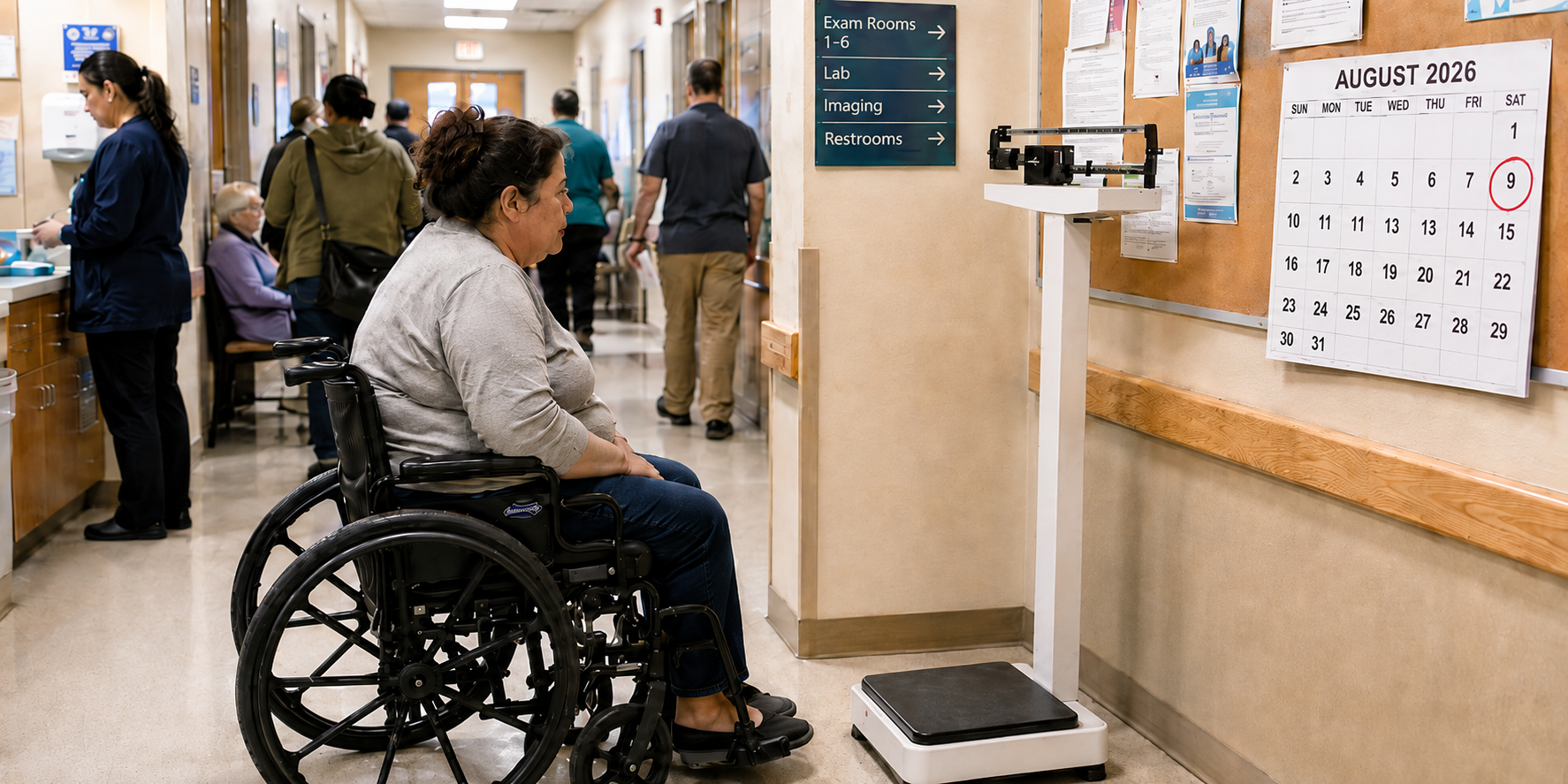
Missing an accessible medical diagnostic equipment compliance date can feel like a big problem, especially when equipment purchases, facility planning, staff training, and regulatory requirements are all involved.
The good news is that missing the date does not mean the facility is out of options.
It means:
- it is time to take a clear look at MDE what is involved,
- identify the most immediate patient-access gaps, and
- build a practical plan for moving forward.
ADA compliance requirements may affect both public and private healthcare organizations. State and local government facilities may be covered under Title II of the Americans with Disabilities Act, while many private hospitals, clinics, physician practices, imaging centers, dental offices, and rehabilitation facilities may be covered under Section 504 because they receive federal financial assistance.
While the exact ADA compliance requirements may differ, the next steps to satisfying new regulations are similar.
Start by Confirming the ADA Compliance Requirements that Apply to Your Facility
Not every healthcare organization is obligated to meet the same ADA requirements for medical diagnostic equipment (MDE), so resist the urge to start ordering equipment before confirming the details.
A public hospital may have different obligations than a privately owned clinic. A large health system may also have different deadlines or requirements than a smaller practice.
Step one, bring in the organization’s compliance officer, ADA coordinator, or legal team early. They can help clarify:
- which rules apply
- which locations and departments are affected
- which compliance date may have been missed
- whether current equipment meets the applicable standards
- what should be addressed first
This step can save time and help avoid rushed purchases that do not fully solve the problem.
Every Facility and Situation Is Different
As you explore the following practical steps to ensure you are ADA compliant, even after a deadline has passed, keep in mind that no two healthcare organizations have the same ownership structure, funding, services, equipment inventory, physical layout, or patient population.
A corrective plan that works for a public hospital may not be the right approach for a private imaging center, physician practice, dental office, rehabilitation facility, or multi-site health system.
The practical tips in this article are meant to help healthcare organizations begin thinking through their response to a missed accessible MDE compliance date. They are not legal advice and are not intended to replace guidance from an ADA coordinator, compliance officer, legal team, risk management department, or another qualified advisor.
Those professionals should help determine which requirements apply, whether the organization is out of compliance, what temporary measures are appropriate, and whether the corrective plan is sufficient.
And now, on to practical recommendations to bring your facility into compliance with ADA requirements for MDE.
Take Stock of the MDE You Already Have
The next step is to understand what accessible MDE is currently available in your facility.
Review equipment that patients may need to transfer onto, sit in, stand on, or use while remaining in a wheelchair. This may include:
- examination tables
- examination and procedure chairs
- weight scales
- wheelchair-accessible scales
- mammography equipment
- imaging tables
- x-ray equipment
- other diagnostic positioning equipment
For each item, note its location, accessibility features, condition, age, and expected replacement date. It is also helpful to document transfer height, wheelchair access, lift compatibility, and the space available around the equipment.
Do not rely only on a product description that calls an item accessible. Ask for manufacturer documentation and compare the equipment with the standards that apply to the facility.
Identify the Most Immediate Patient-Access Gaps
The equipment review may uncover several areas that need attention.
Gaps cannot always be corrected simultaneously, so facilities should work with their compliance and legal teams to decide what needs attention first.
Start by looking at:
- locations without an accessible examination table
- facilities without an accessible weight scale
- departments that frequently serve patients with mobility disabilities
- high-volume clinical areas
- preventive and time-sensitive screening services
- locations where examinations have been delayed or modified
- departments that have received accessibility complaints
- situations that depend on unsafe or difficult manual transfers
The goal is to remove the most significant barriers while building a broader plan for the rest of the organization.
Put Temporary Access Procedures in Place
These days, especially with health facilities from coast to coast purchasing MDE in response to the August 2026 compliance deadline, new equipment may not arrive immediately. Lead time, room preparation, budgeting, installation, and training can all affect an MDE implementation schedule.
While permanent improvements are underway, establish procedures for patients who need accessible equipment. Depending on the facility, that may involve:
- scheduling the patient in an accessible room
- directing the appointment to another location within the health system
- confirming accessibility needs before the visit
- coordinating around the availability of accessible equipment
- assigning trained staff to assist with transfers and positioning
Temporary measures should be reviewed by compliance, clinical leadership, risk management, and legal counsel. They should not place the responsibility on the patient to find an accessible option or depend on unsafe lifting practices.
Create a Practical Corrective-Action Plan
Once the gaps are identified, put the next steps in writing.
A corrective-action plan does not need to be overly complicated, but it should make clear what needs to happen, who is responsible, and when each step is expected to be completed.
Include:
- the ADA compliance requirement that applies
- the missed compliance date
- the equipment or access gaps identified
- temporary procedures already in place
- equipment that must be purchased, leased, or relocated
- room changes that may be needed
- delivery and installation timelines
- staff-training responsibilities
- progress-review dates
- a target completion date
ADA MDE compliance often involves several departments, including compliance, legal, procurement, facilities, clinical operations, biomedical engineering, finance, and risk management. Assigning responsibility helps keep the project moving.
Look at the Room as Well as the Equipment
Buying accessible equipment is only part of the process. The room must also work for the patient, staff, and equipment.
Before placing an equipment order, review:
- doorways and access routes
- clear floor space
- wheelchair turning space
- transfer approach
- patient-lift access
- staff working space
- electrical requirements
- nearby cabinets and furniture
- delivery and installation access
An accessible examination table may still be difficult to use when it is placed too close to a wall or blocked by other equipment.
Room layouts and CAD-based plans can help teams confirm fit, movement, and transfer space before equipment arrives.
 Learn more about CME Corp’s CAD-based Layout and Design Services.
Verify the Equipment Before Ordering
When a deadline has already passed, there may be pressure to move quickly. Even so, it is worth taking the time to confirm that the equipment fits the requirement and the intended space.
Before purchasing, review:
- manufacturer accessibility documentation
- transfer-surface height
- transfer-surface dimensions
- transfer supports
- wheelchair clearance
- patient-lift compatibility
- weight capacity
- positioning features
- required accessories
- delivery lead time
- installation requirements
- training needs
Keep product specifications, room plans, quotes, approvals, and purchase records together as part of the corrective-action file.
Shop CME Corp. for Accessible MDE.
Make Staff Training Part of the Plan
Accessible equipment is only useful when staff know where it is and how to use it.
Training should cover:
- how to identify patients who may need accessible equipment
- how to discuss accessibility needs respectfully
- how to operate height and positioning features
- how to use transfer supports
- how to assist with transfers
- how to use compatible patient lifts
- how to prepare the room before the appointment
- how to report damaged or unavailable equipment
- how to escalate an unresolved accessibility concern
Training records should also be included in the organization’s compliance documentation.
Document the Steps to Compliance Along the Way
Good documentation helps the organization track progress and shows how the facility responded after identifying the gap.
Keep records of:
- equipment assessments
- compliance and legal reviews
- temporary access procedures
- product research
- manufacturer specifications
- quotes and purchase orders
- room-layout reviews
- delivery and installation dates
- staff training
- progress meetings
- completed corrective actions
Documentation does not replace compliance, but it gives the organization a clear record of the decisions made and the work completed.
Build Accessibility Into Future Equipment Planning
A missed deadline may also point to a larger equipment-planning issue.
Once the immediate concerns are addressed, add accessibility reviews to:
- capital-equipment requests
- replacement planning
- approved product lists
- renovation and construction projects
- standard room designs
- leasing decisions
- equipment inventories
- staff onboarding
- annual training
Making accessibility part of the regular purchasing process can reduce the likelihood of compliance issues in the future.
Partner With CME Corp. for Accessible MDE
CME Corp. partners with healthcare facilities to source and acquire accessible medical diagnostic equipment, including examination tables, procedure chairs, weight scales, wheelchair-accessible scales, mammography and imaging equipment as well as equipment used for patient examinations.
In addition to longstanding equipment expertise and relationships with leading healthcare equipment manufacturers, CME is the only medical equipment distributor nationwide positioned to deliver and install equipment direct to site with CME-employed teams. With 25+ warehouses coast to coast, we are accessible to healthcare facilities and systems everywhere. And managing all the moving parts are our in-house project management teams focused on ensuring your equipment acquisition is as stress-free as possible.
Click CHAT to discuss your accessible MDE needs and the next steps for your facility.
About CME: CME Corp is the nation’s premier specialty distributor of healthcare, laboratory, and imaging equipment. We partner with over 2,000 manufacturers to offer more than 2 million products. In addition to an extensive product portfolio, we also offer project management, CAD-based layout, design and 3d modeling, warehousing, assembly, staging, consolidated, need-by-date direct-to-site delivery, and biomedical and technical services, all staffed by CME employees. Our mission, to help healthcare facilities nationwide reduce the cost of the equipment they purchase, make their equipment acquisition, delivery, installation, and maintenance processes more efficient, and help them seamlessly launch, renovate, or expand on schedule, is supported by service locations strategically located across the country.