

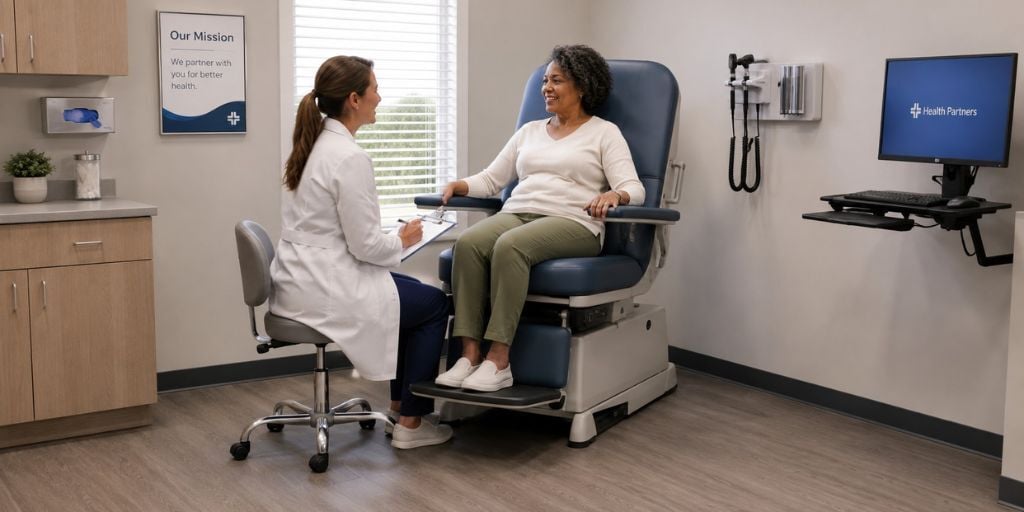
Medical diagnostic equipment accessibility is an important compliance requirement that is increasingly influencing equipment acquisition decisions. While many facilities focus on accessible entrances, parking, and restrooms, patients also need to be able to safely use exam tables, scales, imaging equipment, dental chairs, and other diagnostic equipment during routine care.
This article and answers the questions and explores:
What Exactly Is Medical Diagnostic Equipment Accessibility?
Which Healthcare Facilities Need to Pay Attention to MDE Accessibility Requirements?
What Healthcare Facilities Need to Know About Accessible MDE
What Equipment Is Included in MDE Accessibility Planning?
How Procurement Teams Should Evaluate Accessible MDE
How MDE Accessibility Fits Into Equipment Standardization
The Risks of Ignoring MDE Accessibility
What Exactly Is Medical Diagnostic Equipment Accessibility?
Starting with the basics, medical diagnostic equipment accessibility means that equipment used for exams, measurements, imaging, and diagnostic procedures can be accessed and used by patients with disabilities.
Accessible MDE helps patients with mobility disabilities receive care in a way that is safe, dignified, and comparable to the care received by patients without disabilities. It also helps clinicians complete exams, collect accurate measurements, and avoid unsafe workarounds.
Common MDE accessibility barriers include:
- fixed-height exam tables that are too high for wheelchair transfer
- exam chairs that do not lower to an accessible transfer height
- weight scales that cannot accommodate wheelchair users
- mammography equipment that requires the patient to stand
- imaging tables that do not allow safe transfer or positioning
- rooms where equipment placement blocks wheelchair access or patient lift use
These barriers can affect routine care, preventive screenings, chronic disease monitoring, imaging, dental care, women’s health, rehabilitation, emergency care, and specialty visits.
Which Healthcare Facilities Need to Pay Attention to MDE Accessibility Requirements?
The short version, pretty much all of them.
Healthcare organizations should not assume MDE accessibility requirements only apply to large hospitals or public healthcare systems.
MDE accessibility may be relevant to:
- hospitals
- physician practices
- dental offices
- ambulatory care centers
- urgent care centers
- emergency rooms
- clinics
- public health facilities
- imaging centers
- women’s health practices
- rehabilitation facilities
- specialty care locations
- pediatric practices
Recipients of HHS federal financial assistance may need to comply with Section 504 requirements.
State and local government healthcare entities may need to comply with ADA Title II MDE requirements.
Private healthcare organizations may also have accessibility obligations under other ADA and nondiscrimination requirements.
A private practice, dental office, clinic, or specialty care site should not assume it is outside the scope without reviewing its funding, payer participation, ownership structure, and legal obligations.
What Do Healthcare Facilities Need to Know About Accessible Medical Diagnostic Equipment?
For a laundry list of reasons, healthcare organizations can fall into the trap of being seduced by the assumption that accessibility only applies to buildings. Healthcare access, however, does not stop at the front door.
While a facility may have accessible parking, ramps, restrooms, and doorways, accessibility barriers still exist if patients cannot safely transfer onto an exam table, use a scale, or access imaging equipment.
For this reason, medical diagnostic equipment accessibility is becoming a more clearly defined compliance, procurement, and patient access issue for healthcare organizations.
For hospitals, clinics, physician practices, dental offices, emergency rooms, imaging centers, and other care settings, accessible MDE should be part of equipment planning, replacement cycles, capital budgeting, and procurement review.
What Equipment Should Be Included in MDE Accessibility Planning?
MDE accessibility planning should include any diagnostic equipment patients must access, transfer onto, sit in, stand on, or be positioned with during care.
Common examples include:
- height-adjustable exam tables
- accessible exam chairs
- accessible dental chairs
- wheelchair-accessible weight scales
- imaging tables
- mammography equipment
- x-ray equipment
- diagnostic positioning equipment
- equipment used in seated, standing, supine, prone, or side-lying positions
The Access Board’s MDE standards are organized around different equipment categories and patient positions, including equipment used by patients in a supine, prone, or side-lying position; seated position; wheelchair position; and standing position.
For procurement teams, that means “accessible” should not be accepted as a vague product claim. Equipment should be reviewed against applicable standards, manufacturer specifications, transfer requirements, patient lift compatibility, and room layout.
Let’s take look at the risky assumptions healthcare facilities make to justify not upgrading MDE.
 Shop CME Corp. for ADA Compliant MDE
The Assumptions
The most common MDE accessibility mistakes often begin with assumptions.
Healthcare leaders may assume:
- “We are not a hospital.”
- “We are too small.”
- “We lease our space.”
- “We already have accessible parking and restrooms.”
- “We have one accessible exam room.”
- “We can transfer patients manually.”
- “We will address it when someone asks.”
- “Our current equipment still works.”
These assumptions can create gaps between compliance expectations and daily care delivery.
MDE accessibility requirements these days are specific enough that healthcare organizations can verify their obligations, review current equipment, and include accessibility in capital planning.
How Should Healthcare Procurement Teams Evaluate Accessible MDE?
Procurement teams play an important role in MDE accessibility because equipment purchasing decisions can either reduce barriers or create long-term access problems.
Before purchasing medical diagnostic equipment, procurement teams should consider the answers to these questions:
- Does this equipment fall under MDE accessibility requirements or guidance?
- Does the product meet applicable Access Board MDE standards?
- What accessibility documentation does the manufacturer offer?
- What is the transfer surface height range?
- Does the equipment lower to an accessible transfer height?
- Is the equipment compatible with portable patient lifts?
- What clear floor space is required?
- Which side must remain open for transfer?
- Will this equipment fit the actual room layout?
- Can staff access the patient safely during use?
- Can the equipment be cleaned, maintained, and serviced easily?
- Does this product fit standardization goals across departments or sites?
- What training will staff need?
These questions can help teams avoid buying equipment that looks suitable during product review but creates barriers once installed.
How Does MDE Accessibility Fit Into Equipment Standardization?
Equipment standardization can help healthcare organizations reduce variation, simplify staff training, improve service planning, and strengthen purchasing efficiency.
Still, standardization can create risk if accessibility is not included in the selection criteria. For example:
- A health system that standardizes fixed-height exam tables may repeat the same accessibility barrier across many locations.
- A clinic network that chooses one scale model without wheelchair access may limit accurate weight measurement across all sites.
- A renovation template that ignores accessible transfer space may create room layouts that are difficult to correct later.
The better approach is to include MDE accessibility in standardization decisions from the beginning.
That may include:
- standardizing accessible exam tables where appropriate
- setting minimum accessibility specifications for new purchases
- creating approved product lists that include accessible models
- mapping accessible equipment by location and service line
- including accessibility in room layouts
- reviewing manufacturer documentation before product approval
- coordinating procurement, clinical, facilities, compliance, and biomedical input
Accessible MDE should not be considered a one-off exception. It should be part of the organization’s equipment strategy.
What Are the Risks of Ignoring MDE Accessibility Requirements?
Ignoring MDE accessibility requirements can create compliance, operational, financial, and patient experience risks.
Potential risks include:
- incomplete exams
- delayed care
- missed or inaccurate measurements
- unsafe patient transfers
- greater staff strain
- patient complaints
- regulatory scrutiny
- reputational damage
- costly last-minute equipment purchases
- inefficient room use
- inconsistent workflows across locations
MDE barriers can also affect patient dignity.
Patients with disabilities should not:
- have to repeatedly explain their needs,
- wait for a special room, skip part of an exam, or
- travel to another site for equipment that should be available as part of routine care.
Accessible MDE helps healthcare organizations deliver care more consistently and respectfully.
Because MDE accessibility touches so many parts of a healthcare organization, from compliance and procurement to room design and day-to-day patient care, it is difficult to address effectively as a last-minute equipment purchase. A stronger approach is to evaluate accessibility needs early and align with a specialty healthcare equipment distributor who offers a comprehensive set of integrated equipment acquisition services.
Partner with CME Corp. for MDE
Accessible medical diagnostic equipment planning integrates compliance awareness, procurement, clinical workflow, facility layout, logistics, installation, and lifecycle management.
CME Corp. helps healthcare organizations and facilities manage equipment acquisition with those moving parts in mind.
Our account managers’ expertise includes; sourcing, manufacturer coordination, product comparisons, standardization discussions, CAD-based room layout and design, warehousing, assembly, staging, direct-to-site delivery and installation planning, and lifecycle guidance.
Click CHAT to begin the conversation about your accessible MDE needs.
Frequently Asked Questions About MDE Accessibility
What does MDE stand for in healthcare?
MDE stands for medical diagnostic equipment. It refers to equipment used by healthcare providers to examine, diagnose, measure, or assess a patient’s health condition.
What are examples of medical diagnostic equipment?
Examples of medical diagnostic equipment include exam tables, exam chairs, dental chairs, weight scales, imaging tables, x-ray equipment, mammography equipment, and other diagnostic equipment used for patient positioning, transfer, measurement, or examination.
What makes medical diagnostic equipment accessible?
Accessible medical diagnostic equipment is designed so patients with disabilities can use it to the maximum extent possible. Features may include adjustable height, accessible transfer surfaces, wheelchair access, patient lift compatibility, adequate clear floor space, and usable positioning features.
Are accessible exam tables required?
Some healthcare organizations may be required to have accessible exam tables under Section 504, ADA Title II, or other applicable requirements. HHS has stated that recipients using exam tables and weight scales have until July 8, 2026, to have at least one accessible exam table and one accessible weight scale. Organizations should verify requirements with qualified legal and compliance professionals.
Are wheelchair-accessible scales required?
Some healthcare organizations may be required to have wheelchair-accessible scales depending on their funding, ownership, and applicable regulations. Accessible scales are also important for accurate and dignified care when patients cannot stand safely or transfer easily.
Do MDE accessibility requirements apply to private practices?
They may. Private practices should not assume they are exempt. Applicability may depend on federal financial assistance, payer participation, ownership structure, and other legal factors. Practices should review obligations with qualified counsel or compliance professionals.
Do MDE accessibility requirements apply to dental offices?
They may. HHS has identified dentists among the healthcare recipients that may be covered by accessible MDE requirements when they receive HHS federal financial assistance. Dental chairs and related diagnostic equipment should be reviewed as part of accessibility planning.
Is one accessible exam room enough?
Not always. One accessible exam room may not meet operational needs if it is difficult to schedule, located far from the service line, lacks an accessible scale, is blocked by furniture, or does not meet patient volume needs. Healthcare organizations should plan accessible MDE around actual care delivery.
About CME: CME Corp is the nation’s premier specialty distributor of healthcare, laboratory, and imaging equipment. We partner with over 2,000 manufacturers to offer more than 2 million products. In addition to an extensive product portfolio, we also offer project management, CAD-based layout, design and 3d modeling, warehousing, assembly, staging, consolidated, need-by-date direct-to-site delivery, and biomedical and technical services, all staffed by CME employees. Our mission, to help healthcare facilities nationwide reduce the cost of the equipment they purchase, make their equipment acquisition, delivery, installation, and maintenance processes more efficient, and help them seamlessly launch, renovate, or expand on schedule, is supported by service locations strategically located across the country.