

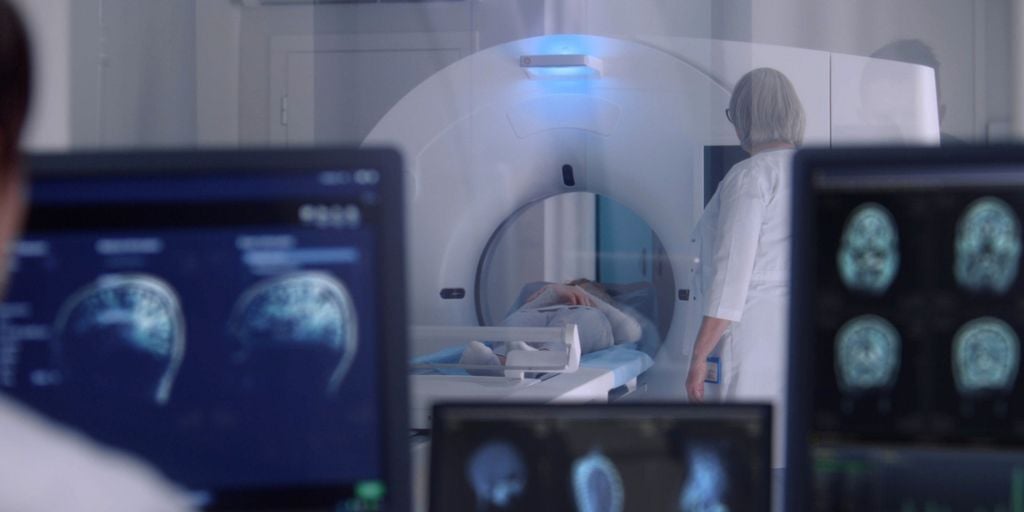
In the rapidly advancing world of medical imaging, nuclear cameras, also known as gamma cameras or emission scanners, serve as the "physiologists" of radiology. Unlike X-rays or CT scans that primarily map the body’s anatomy, nuclear cameras visualize how the body functions at a molecular level. By detecting radiopharmaceuticals as they travel through organs, these cameras help clinicians identify diseases like cancer, heart conditions, and neurological disorders long before structural changes become visible.
This guide will explore the diverse world of nuclear cameras by answering these questions:
- What are the primary types of nuclear cameras?
- How does PET/CT scanning differ from traditional nuclear scans?
- What are the benefits of dedicated cardiac nuclear cameras?
- Can nuclear cameras be portable for bedside use?
- How is AI transforming nuclear camera software?
What are the Primary Types of Nuclear Cameras?
Nuclear medicine defines two primary categories of equipment: Gamma Camera systems, often used for Single-Photon Emission Computed Tomography (SPECT), and Positron Emission Tomography (PET) scanners. While gamma cameras detect single gamma rays, PET scanners detect pairs of photons from positron annihilation, offering higher resolution and sensitivity for complex metabolic tracking.
The Traditional Gamma Camera
The "workhorse" of nuclear medicine is the Anger camera, or gamma camera. It consists of one or two large detector heads containing scintillation crystals. These heads capture gamma rays emitted from a patient and convert them into 2D "planar" images or 3D SPECT reconstructions.
- Feature: Large-field-of-view detectors capable of imaging the whole body.
- Benefit: Highly versatile; used for everything from bone scans to thyroid uptake studies.
SPECT and SPECT/CT Hybrid Systems
SPECT involves rotating the gamma camera heads around the patient to create 3D cross-sectional slices. Modern systems are almost exclusively "hybrids," meaning they include a built-in CT scanner.
- Feature: Simultaneous acquisition of functional (SPECT) and anatomical (CT) data.
- Benefit: Improved localization. Surgeons can see exactly where a "hot spot" is located relative to vessels or bones thereby reducing surgical errors and improving diagnostic confidence.
How does PET/CT Imaging Differ from Traditional Nuclear Scans?
PET/CT scanners are the gold standard for high-resolution metabolic imaging. They use specialized tracers like FDG (fluorodeoxyglucose) to identify "hungry" cancer cells. PET technology offers significantly higher spatial resolution (5-7mm) compared to SPECT (12-15mm), allowing for the detection of much smaller lesions in the early stages of disease.
The Digital PET Revolution
As of 2025, digital PET scanners have largely replaced analog systems in top-tier hospitals. These scanners use Silicon Photomultiplier (SiPM) technology instead of older vacuum tubes.
- Feature: 1:1 photon coupling and significantly higher sensitivity.
- Benefit: Faster scan times (as short as 5 minutes) and reduced radiation doses. This is particularly beneficial for pediatric patients and those requiring frequent follow-up scans.
Whole-Body PET
New "Total Body" PET scanners can image the entire body in a single bed position.
- Feature: Ultra-long axial field of view.
- Benefit: Enables researchers to watch tracers move through all organs simultaneously, which is revolutionary for drug development and systemic disease research.
What are the Benefits of Dedicated Cardiac Nuclear Cameras?
Dedicated cardiac cameras are engineered specifically to image the heart with maximum speed and clarity. Unlike general-purpose cameras, these systems often use solid-state CZT (Cadmium Zinc Telluride) detectors and upright positioning to reduce artifacts caused by the diaphragm or patient motion.
CZT Detector Technology
Conventional cameras use bulky crystals and photomultiplier tubes. CZT cameras convert gamma rays directly into digital signals.
- Feature: Compact, solid-state detectors that can be positioned closer to the patient’s chest.
- Benefit: Superior energy resolution and "count" sensitivity allows for low dose "stress tests" that are safer for the patient.
Upright vs. Supine Imaging
Some cardiac cameras allow the patient to sit in a chair rather than lie flat.
- Feature: Open, upright gantry design.
- Benefit: Ideal for patients with congestive heart failure (who cannot lie flat) or those with claustrophobia. Upright imaging also naturally moves the liver and gallbladder away from the heart, clearing up the image.
Can Nuclear Imaging be Portable for Bedside Use?
Yes, portable nuclear cameras are now a reality for intensive care units and operating rooms. These compact, mobile units allow critically ill or immobile patients to receive diagnostic-quality cardiac or organ scans without the risk and logistical burden of being transported to a radiology suite.
Mobile Gamma Cameras
Portable units are usually single-headed systems mounted on a motorized cart.
- Feature: Battery-powered operation and small footprint.
- Benefit: Immediate "point-of-care" diagnostics. For a patient on a ventilator in the ICU, the ability to perform a lung perfusion scan at the bedside can be lifesaving.
Surgical "Gamma Probes"
While not a full camera, these handheld devices are essential in the OR.
- Feature: Pen-like detectors used to find radioactive "sentinel" lymph nodes.
- Benefit: Minimizes the extent of surgery by helping surgeons identify only the specific tissues that need to be biopsied.
How is AI Transforming Nuclear Camera Software?
AI is no longer just a buzzword; it has become deeply integrated into the hardware-software loop of nuclear cameras. AI algorithms are used for "Deep Learning Reconstruction," which cleans up noisy images, and "Auto-Quantification," which provides objective measurements of organ function.
Denoising and Speed
- Feature: AI-driven image enhancement.
- Benefit: Allows labs to use less radiotracer while maintaining "diagnostic grade" image quality. This protects the staff and reduces the cost per scan.
Predictive Maintenance
- Feature: Smart sensors within the camera gantry.
- Benefit: The camera can "self-diagnose" a failing detector or a cooling issue, alerting the manufacturer for a repair before the equipment actually breaks down, thus avoiding patient rescheduling.
How can partnering with CME Corp. improve nuclear imaging capabilities for healthcare facilities?
Partnering with CME Corp., specialists in capital imaging equipment, can help ensure you are acquiring nuclear imaging equipment that not only conforms to current needs but also positions you for the future.
CME Account Managers are nuclear imaging equipment savvy. Their expert guidance can help you evaluate nuclear cameras and their features so you select the equipment that best aligns to your needs. And, with CAD-based layout and design services our sales team can offer you the advantage of seeing how the nuclear imaging equipment you are evaluating will interact with your environment.
Our relationships with leading nuclear camera manufacturers position us to be ready with alternative product recommendations that do not compromise function or performance. when the frustrating reality of supply chain challenges or budget constraints hit.
 Find Your Account Manager or click CHAT to begin the conversation about your upcoming nuclear camera needs.
FAQ: Frequently Asked Questions about Nuclear Cameras
Is a SPECT/CT scan the same as a PET/CT scan?
No. While both are "hybrids," they use different radiotracers and detectors. SPECT is generally used for bone, heart, and gallbladder scans, while PET is the primary tool for cancer staging and brain metabolism.
Does the nuclear camera emit radiation like an X-ray?
Actually, no. The nuclear camera is just a giant "eye" or detector. The radiation comes from the radiotracer injected into the patient. The camera simply records where that radiation is coming from.
Why would a facility choose a CZT camera over a traditional one?
CZT cameras offer much better resolution and can complete a cardiac scan in roughly one-third the time of a traditional camera. This efficiency makes them a go-to for high-volume clinics.
Can obese patients fit in these cameras?
Modern "open" gantries and upright cardiac cameras are designed to accommodate patients up to 500 pounds (and in some cases, 1,000 lbs.) The open design and upright positioning offer a more comfortable experience than traditional "closed" donuts.
How long do nuclear cameras usually last?
With proper maintenance and software updates, a high-quality nuclear camera has a clinical lifespan of about 7 to 10 years before the hardware technology is considered outdated.
About CME: CME Corp is the nation’s premier specialty distributor of healthcare and laboratory equipment. We partner with over 2,000 manufacturers to offer more than 2 million products across healthcare, laboratory, pharmacy, and research sectors. In addition to an extensive product portfolio, we also offer project management, CAD design, warehousing, logistics, consolidated direct-to-site delivery, and biomedical and technical services, all staffed by CME employees. Our mission, to help healthcare facilities nationwide reduce the cost of the equipment they purchase, make their equipment acquisition, delivery, installation, and maintenance processes more efficient, and help them seamlessly launch, renovate, or expand on schedule, is supported by 25 service locations strategically located across the country.